To the average observer, the cryptocurrency space looks like a hyper-volatile, chaotic wild west. Financial headlines alternate between overnight teenage dog-coin millionaires and catastrophic multi-billion-dollar platform collapses. Because the public discourse is dominated by extreme speculation and internet hype, most rational individuals dismiss the entire asset class as an economic bubble or an unstable digital gambling ring.
This reaction is understandable, but it misses a massive structural shift happening in global financial engineering. Behind the noisy marketing hype of speculative token trading lies a revolutionary data layer: decentralized cryptographic ledgers. Understanding this infrastructure isn’t about chasing fast riches; it is about recognizing how decentralized protocols are fundamentally altering how humanity tracks ownership, verifies authenticity, and transfers value across global borders.
If you want to build a truly diversified, modern financial portfolio, you cannot base your strategy on rumors or fear. You must understand the raw, objective computer science mechanics under the hood. This comprehensive guide will break down the exact cryptographic principles of blockchain networks, demystify the core difference between Bitcoin and smart-contract utility protocols like Ethereum, and deliver a strict, battle-tested operational guide to securing digital assets from advanced online vulnerabilities.
⛓️ 1. The Decentralized Ledger: How Blockchain Solves the Trust Problem
To understand cryptocurrency, you must first understand how traditional banking moving cash works. When you send money to a friend via your UBL banking app, you rely on a single centralized entity—the bank—to act as the record keeper. The bank maintains a private database ledger that says you have less money and your friend has more money. You trust that the bank’s database is secure, accurate, and completely free from tampering.
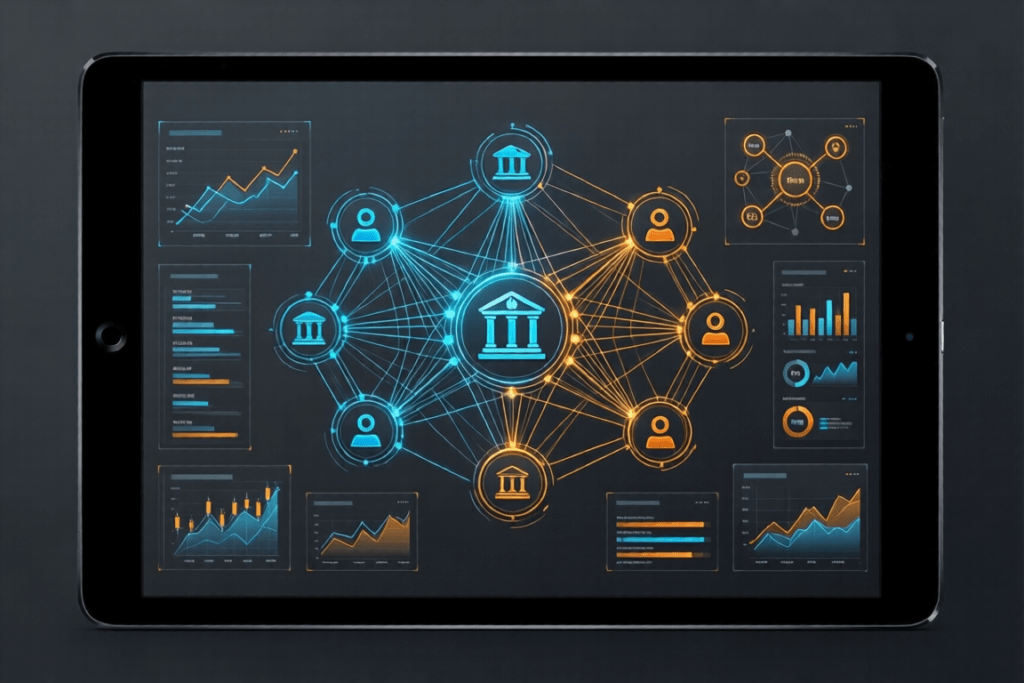
A Blockchain removes the need for this centralized middleman entirely. It is a shared, public, digital ledger that is distributed across a massive global network of independent computers called nodes.
The Block Mechanics:
- The Transaction Loop: When someone initiates a digital transaction, it is broadcast to this global network of computers.
- The Cryptographic Bundle: Independent nodes bundle multiple transactions together into a digital “block.”
- The Ledger Lock: The network uses advanced mathematical algorithms (like Proof of Work or Proof of Stake) to verify that the transaction records are valid. Once verified, the new block is permanently chained to the previous block using unchangeable cryptographic seals.
Because identical copies of this entire ledger are stored across thousands of computers simultaneously, it is physically impossible to alter past transactions. If a malicious hacker tries to edit the ledger on one machine to give themselves fake funds, the remaining thousands of computers will instantly compare their identical ledgers, flag the edit as fraudulent, and completely reject the transaction. The system replaces human trust with pure, decentralized mathematics.
🪙 2. Sifting Through the Noise: Store of Value vs. Smart Contract Utility
The word “crypto” is an overly broad umbrella term that confuses two completely distinct types of digital technology. To invest pragmatically, you must separate digital assets into their true utility classifications:
Asset Class A: Bitcoin (The Decentralized Store of Value)
Bitcoin is mathematically designed to be digital gold. Traditional national currencies (like the US Dollar or Pakistani Rupee) have an infinite supply; central governments can print more money whenever they choose, which silently dilutes your savings through inflation.
- The Supply Cap: Bitcoin’s code enforces a absolute lifetime hard cap of 21 million coins. No more can ever be created.
- The Utility: Because it is scarce, completely decentralized, and impossible to counterfeit, individuals use Bitcoin as an independent, long-term hedge to protect their purchasing power from being eroded by local government inflation cycles.
Asset Class B: Ethereum (The Global Smart Contract Computer)
Ethereum is not trying to be a currency or digital gold. It is a massive, decentralized software engine. It allows developers to write automated, programmatic legal agreements called Smart Contracts.
- The Utility: A smart contract is an “if/then” script that executes automatically without human escrow agents. For example, a smart contract can say: “IF User X transfers a digital book file to User Y, THEN automatically release the $20 payment to User X’s digital wallet.” This tech forms the foundation of entire decentralized finance networks, tracking pipelines, and digital identity structures.
🔒 3. The Digital Fortress: Hardening Your Private Key Security
If you purchase cryptocurrency and leave it sitting on a centralized exchange app, you do not actually own that cryptocurrency. You are simply holding an IOU from a business. If that exchange platform goes bankrupt, gets hacked, or freezes its database, your assets can vanish instantly into corporate bankruptcy loops.
To protect your wealth, you must take absolute, sovereign control of your digital assets using the foundational law of decentralized networks: “Not your keys, not your coins.”
Implement these strict operational security protocols right now from your PC setup:
Step 1: Secure a Non-Custodial Software Wallet
Download a reputable, non-custodial digital wallet utility like MetaMask, Phantom, or Trust Wallet. During the initialization sequence, the app will generate a unique 12-to-24-word Seed Phrase. This phrase is your master cryptographic signature. It is the literal private key to your assets.
Step 2: Establish an Absolute Analog Air-Gap
Never type your seed phrase into an internet-connected device. Do not take a screenshot of it on your phone, do not save it in a Google Doc, and do not email it to yourself. Cyber-criminals use automated malware bots to continuously scan phone camera rolls and text files for seed phrase sequences. Write your master seed phrase down by hand using a physical pen on a clean piece of paper, and store that paper inside a fireproof security safe.
Step 3: Upgrade to Hardware Cold Storage
If your digital asset allocation grows to represent a significant portion of your net worth, buy a dedicated Hardware Wallet (such as a Ledger or Trezor device). These USB hardware devices keep your private keys locked inside an isolated offline chip. Even when you plug the device into a malware-infected computer to initiate an online transaction, your master private key never physically leaves the offline chip, making it impossible for digital phishers to drain your wallet over the web.
📈 Summary Checklist for Crypto Asset Management
- Understand the blockchain mechanics of decentralized verification vs. traditional banking infrastructure.
- Isolate your digital assets strictly by utility (Scarcity hedges like Bitcoin vs. Smart Contract platforms like Ethereum).
- Initialize a non-custodial digital wallet and secure your master seed phrase using an analog paper paper system.
- Implement a strict security protocol, keeping all single-use hot wallets separate from your long-term storage vault.